Female Pastor Faces Social Media Backlash Over Her Clothing, Sparking a Debate About Faith and Respect
A controversy involving a woman described as a church pastor has sparked heated discussions on social media after photographs of her outfit during religious activities began circulating online.
According to the story accompanying the images, some members of the community questioned whether her clothing was appropriate for someone serving in a prominent religious leadership position. Others came to her defense, arguing that a person’s appearance should not automatically determine their character, spirituality, or ability to lead.
What initially appeared to be a debate about clothing soon developed into a much broader conversation about modesty, religious traditions, leadership, gender expectations, and the importance of treating others with dignity.
As the discussion spread, people began asking a deeper question: Should a religious leader’s clothing be a matter of public criticism, or should greater attention be given to their actions, teachings, and contributions to the community?
The Photographs That Started the Debate
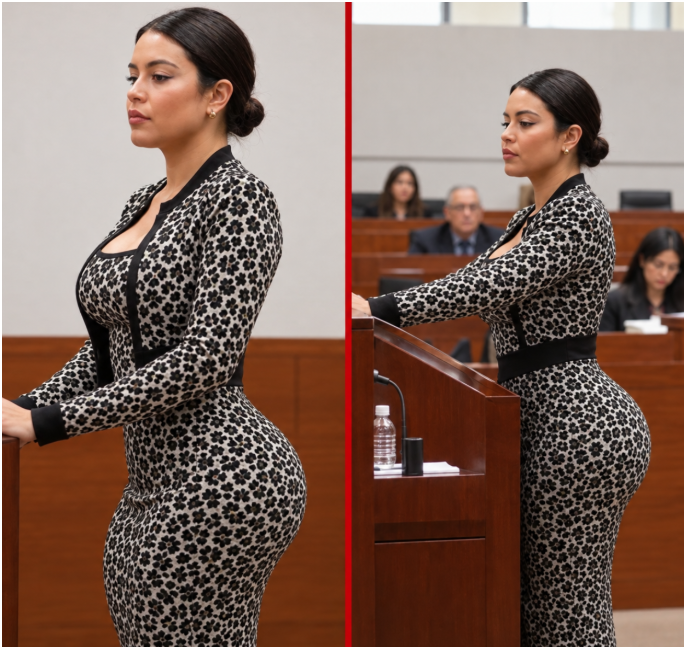
The discussion began when images reportedly showing the woman during church-related activities attracted attention online.
Some viewers expressed concerns about the fit of her clothing, arguing that people in religious leadership positions should dress in ways that reflect the values of their congregations.
Others disagreed with the criticism, suggesting that the conversation had become too focused on the woman’s body rather than her responsibilities as a pastor.
The different reactions revealed a familiar divide between those who emphasize traditional standards of modesty and those who believe personal appearance should not overshadow a person’s character or professional responsibilities.
As more people joined the conversation, the original photographs became the center of a debate that extended far beyond fashion.
Expectations for Religious Leaders
For many believers, pastors and other religious leaders serve as public representatives of their faith. Their conduct, communication, and appearance may therefore be viewed as examples for members of the congregation.
Some churches establish specific expectations about clothing during worship services, ceremonies, and other religious activities.
In these communities, following a dress code may be considered part of respecting the traditions and responsibilities associated with leadership.
Other congregations take a more flexible approach, allowing individual leaders to make their own clothing choices while emphasizing personal conduct, humility, and spiritual commitment.
Because Christian denominations and individual churches differ in their traditions, there is no single dress code followed by every congregation.
The important question is whether expectations are communicated clearly and applied fairly to everyone.
Was the Pastor Expected to Apologize?
According to the story circulating online, some community members wondered whether the pastor would address the criticism or change her clothing choices.
Others reportedly expected an apology from her, believing that her appearance did not align with their understanding of appropriate religious attire.
However, the available narrative does not establish whether these expectations reflected an official church position or simply the opinions of individual viewers.
That distinction matters.
A disagreement between members of a congregation does not necessarily mean that a formal complaint has been made or that church leadership has taken disciplinary action.
Without independent confirmation, claims about the community’s internal response should be treated cautiously.
A Different Perspective on the Controversy
The viral account describes a response in which the pastor reportedly encouraged people to reflect on how quickly someone can be judged by appearance alone.
Rather than focusing exclusively on the clothing in question, the reported message highlighted the difference between expressing a concern respectfully and humiliating another person publicly.
The account also suggests that the woman acknowledged the right of religious communities to establish expectations for their leaders.
If accurately represented, this perspective offers a useful distinction: a church can maintain standards while still treating the people affected by those standards with compassion.
It is possible to disagree with someone’s clothing choices without insulting them, making assumptions about their intentions, or questioning their entire character.
However, because the pastor’s alleged response has not been independently verified here, it should not be presented as a confirmed quotation or documented event.
What Does the Bible Say About Modesty?
Modesty has been an important subject in Christian discussions about personal conduct and religious life.
In 1 Timothy 2:9–10, the Bible discusses modest dress alongside good works and a broader emphasis on godly conduct. In 1 Peter 3:3–4, attention is directed toward inner character rather than outward adornment alone.
Christians interpret and apply these passages in different ways.
Some churches emphasize conservative clothing as a visible expression of respect for worship and religious tradition. Others focus more heavily on the intentions, behavior, and character of the individual.
These differences can arise from cultural traditions, denominational teachings, and the interpretations of church leaders.
For this reason, a clothing choice considered inappropriate in one congregation may be accepted without controversy in another.
A constructive discussion requires understanding the specific standards of the community involved rather than assuming that every church follows identical rules.
Does Clothing Reveal a Person’s Intentions?
One of the central issues in the debate is the tendency to draw conclusions about someone’s intentions based on appearance.
A photograph captures a particular moment, but it cannot reveal everything about the person in it.
It cannot establish why someone selected a particular outfit, what they intended to communicate, or how they approach their religious responsibilities.
Assuming that a woman is deliberately seeking attention or attempting to challenge her congregation simply because of her clothing would go beyond the available evidence.
The same principle applies to positive assumptions. Appearance alone cannot establish someone’s spiritual commitment or leadership ability.
A fair assessment considers a broader range of information, including a person’s actions, responsibilities, conduct, and treatment of others.
How Social Media Can Change a Story
Social media allows photographs and videos to spread rapidly, sometimes reaching audiences far removed from their original context.
As content is shared, captions may change, details may be added, and personal opinions may gradually be presented as established facts.
In some cases, a disagreement that began with a few comments can appear to represent an entire community’s position.
This makes it important to distinguish between verified information and claims repeated by other accounts.
Without a reliable source identifying the woman, confirming the circumstances of the photographs, and documenting her response, readers should avoid treating every detail of the circulating story as fact.
Responsible reporting means recognizing what is known, what is alleged, and what remains uncertain.
Are Female Religious Leaders Judged Differently?
The controversy also raises questions about gender and public expectations.
Some people argue that women in leadership positions face particularly intense scrutiny over their clothing and physical appearance. They believe discussions about women’s bodies can distract from their qualifications, responsibilities, and contributions.
Others maintain that anyone representing a religious institution should be held to the standards established by that institution, regardless of gender.
These positions do not necessarily have to be incompatible.
A church can establish reasonable expectations for its leaders while ensuring that those expectations apply consistently and do not become an excuse for personal humiliation.
The broader issue is not simply whether a particular outfit is appropriate. It is also whether the standards are clear, relevant, and applied fairly.
Why Clear Dress Codes Matter
When a church expects pastors or other leaders to follow particular clothing standards, communicating those expectations clearly can help prevent unnecessary conflict.
A written policy can explain what is expected during worship services, formal ceremonies, and other official activities.
It can also clarify who is responsible for interpreting the rules and how concerns should be addressed.
Without clear guidance, disagreements may arise because individuals rely on different cultural traditions, personal preferences, or assumptions about what religious modesty requires.
Clear expectations do not eliminate every disagreement, but they can help ensure that concerns are addressed consistently and respectfully.
Respect Should Remain at the Center of the Conversation
People can hold different beliefs about modesty and still treat one another with dignity.
Someone may believe that an outfit is unsuitable for a church leader, while another person may consider it entirely acceptable.
Both can explain their perspectives without resorting to insults, ridicule, or degrading comments about someone’s body.
Constructive criticism focuses on the issue being discussed. Personal humiliation attacks the individual instead.
The distinction is especially important when an image begins circulating widely online, where comments from strangers can quickly become overwhelming.
Religious values, including compassion and respect for others, can guide the way disagreements are handled.
A Photograph Cannot Define a Pastor’s Leadership
A person’s effectiveness as a religious leader involves far more than clothing.
Relevant considerations may include the quality of their teaching, their integrity, their treatment of congregation members, their fulfillment of responsibilities, and their contributions to the community.
A photograph cannot provide a complete picture of these qualities.
At the same time, religious institutions may reasonably expect their leaders to understand and respect the standards associated with their roles.
The challenge is finding a fair balance between institutional expectations and individual dignity.
That balance is best achieved through clear communication, consistent standards, and respectful dialogue rather than public speculation.
The Bigger Questions Behind the Controversy
Beyond the clothing itself, the discussion raises several important questions:
- How should churches balance personal freedom with institutional traditions?
- Should dress codes be written clearly and applied equally?
- How can religious leaders respond to criticism without escalating conflict?
- When does expressing concern become public humiliation?
- How can social media users discuss sensitive issues without spreading unverified claims?
Different congregations may answer these questions differently. Nevertheless, they all point toward the importance of thoughtful communication and mutual respect.
Conclusion: Faith, Modesty, and the Importance of Respect
The story of a female pastor criticized for her clothing has prompted a wider conversation about modesty, religious leadership, gender expectations, and the influence of social media.
Some people believe religious leaders should follow conservative standards of dress, while others argue that appearance should never become the primary measure of someone’s character or spiritual commitment.
Both the importance of religious traditions and the dignity of individuals deserve thoughtful consideration.
However, the specific details of this viral account, including the pastor’s alleged response and the congregation’s reaction, remain unverified based on the information provided.
Ultimately, the most constructive lesson is that disagreement does not have to lead to humiliation. Churches can establish clear expectations, members can express concerns respectfully, and online audiences can avoid turning unverified stories into judgments about someone’s character.
True respect means being able to discuss our differences without forgetting the dignity of the person standing on the other side of the debate.